Structural Drying · Project Update
The floor looked dry. The probe readings told a different story.
Why surface appearance alone cannot tell you whether a water-damaged floor is ready for reinstatement.
By Lite Response ·
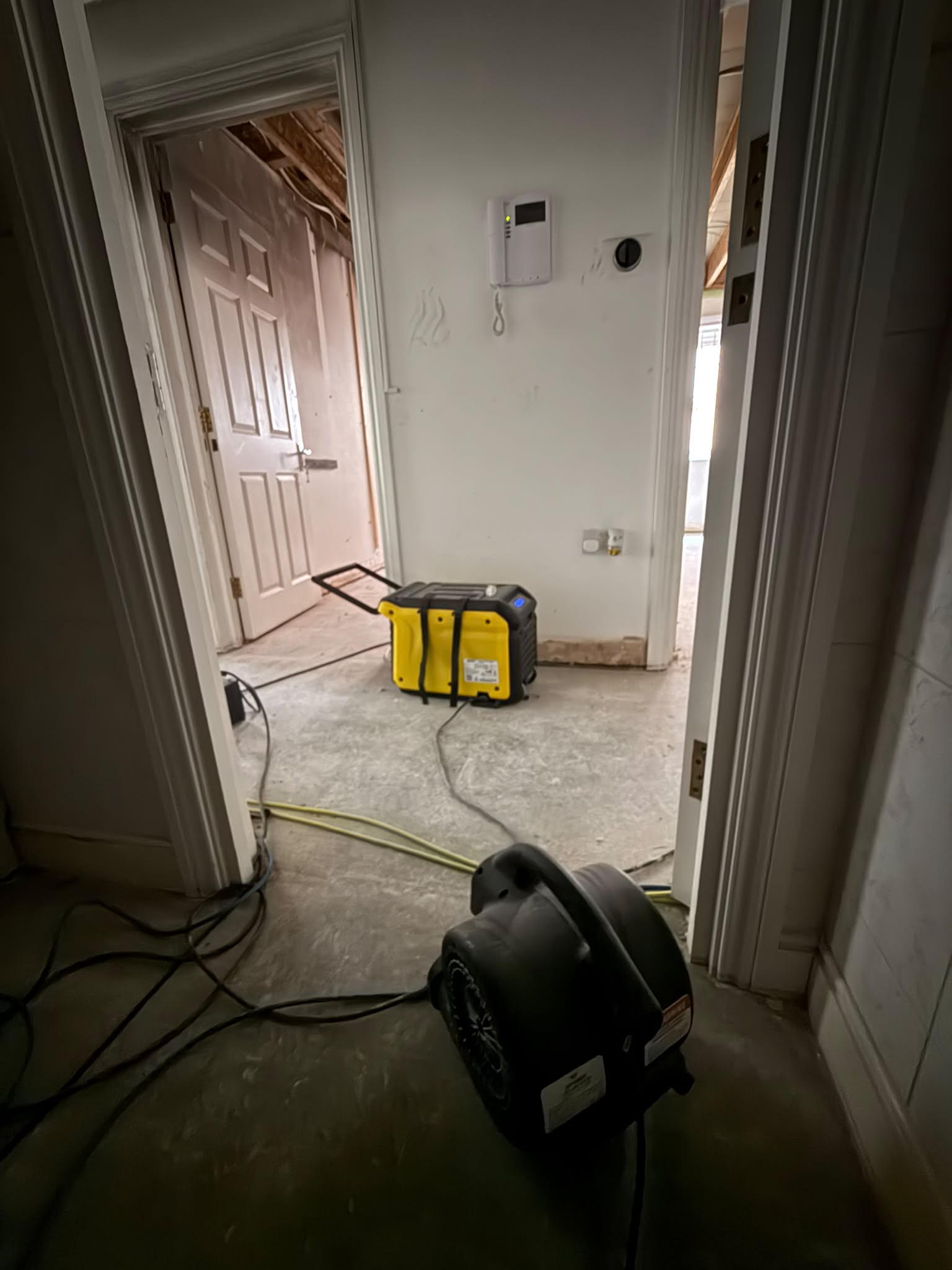
One of the biggest mistakes after water damage is assuming that a floor is dry because its surface looks dry. Moisture can remain deeper within the floor construction even when visible signs of dampness have reduced.
What the drying inspection revealed
On a recent Lite Response drying project, surface moisture readings across much of the property had reduced well. Judged by appearance and surface readings alone, the property could have seemed ready for reinstatement.
The deeper probe readings told a different story. Most areas were progressing well, but moisture was still being held within the floor construction around the kitchen and hallway. One probe location remained significantly higher than the surrounding rooms, showing that a localised area still needed attention.
That distinction matters: good progress across a property does not mean every part of its construction has reached a suitable condition for permanent finishes. This is why we carry out drying progress inspections rather than relying on appearance alone.
What do we check during a drying update?
The inspection methods depend on the construction, access and extent of the water damage. A drying update may include:
- Surface moisture readings across affected materials.
- Relative humidity and temperature monitoring.
- Dew point assessment to understand condensation conditions.
- In-depth floor probe readings at suitable locations.
- Checks for moisture retained beneath screeds or within insulation.
- A review of the drying equipment and how effectively it is working.
The aim is not simply to collect another set of numbers. It is to establish where moisture remains, whether the drying strategy is working and what needs to happen next. Our moisture surveys help inform that assessment.
Why deeper floor moisture testing matters
Concrete and screeded floors can appear dry at the surface while still retaining moisture deeper within the floor build-up. Surface readings alone cannot establish the condition of every concealed layer.
Readings also need to be interpreted in context: the material, instrument, test method and conditions all matter. There is no single reading that proves every type of floor is ready for every type of finish. Where flooring is planned, the relevant testing method and the flooring or adhesive manufacturer's requirements also need to be considered.
Installing flooring, joinery or finishes too early can increase the risk of damaged floor finishes, adhesive failure, mould growth, odours and further remedial work.
Using the findings to guide targeted structural drying
Comparing surface readings with deeper probe readings helps identify areas that need further attention. Where appropriate, the drying effort can then be concentrated on those locations instead of continuing the same equipment arrangement throughout the property.
Depending on the construction and findings, this may involve adjustments to the structural drying arrangement or consideration of specialist methods such as injection drying. The method must suit the materials and conditions; it is not a standard answer for every wet floor.
Drying should be measured, not guessed
A drying update report gives the property owner and, where agreed, the insurer or reinstatement contractor a record of progress. It should show which areas are improving, where moisture remains and what further assessment or drying may be needed.
Drying does not itself repair damaged finishes. Once the findings support moving to the next stage, permanent repairs and reinstatement can be considered under a separate instruction. Lite Build may undertake that building work under a separate contract, while Lite Response remains focused on assessment, mitigation, drying and reporting.
Moisture surveys and water-damage drying support
Lite Response provides moisture surveys, structural drying and drying progress inspections across Essex, London, Kent, Suffolk, Hertfordshire, Cambridgeshire, Bedfordshire and Buckinghamshire, subject to the nature and location of the work.
If a floor looks dry but you are unsure about retained moisture, discuss a moisture survey or drying inspection with Lite Response. You can also read about our water and flood damage services and documented recovery process.